








Design benefits
-
Visibility
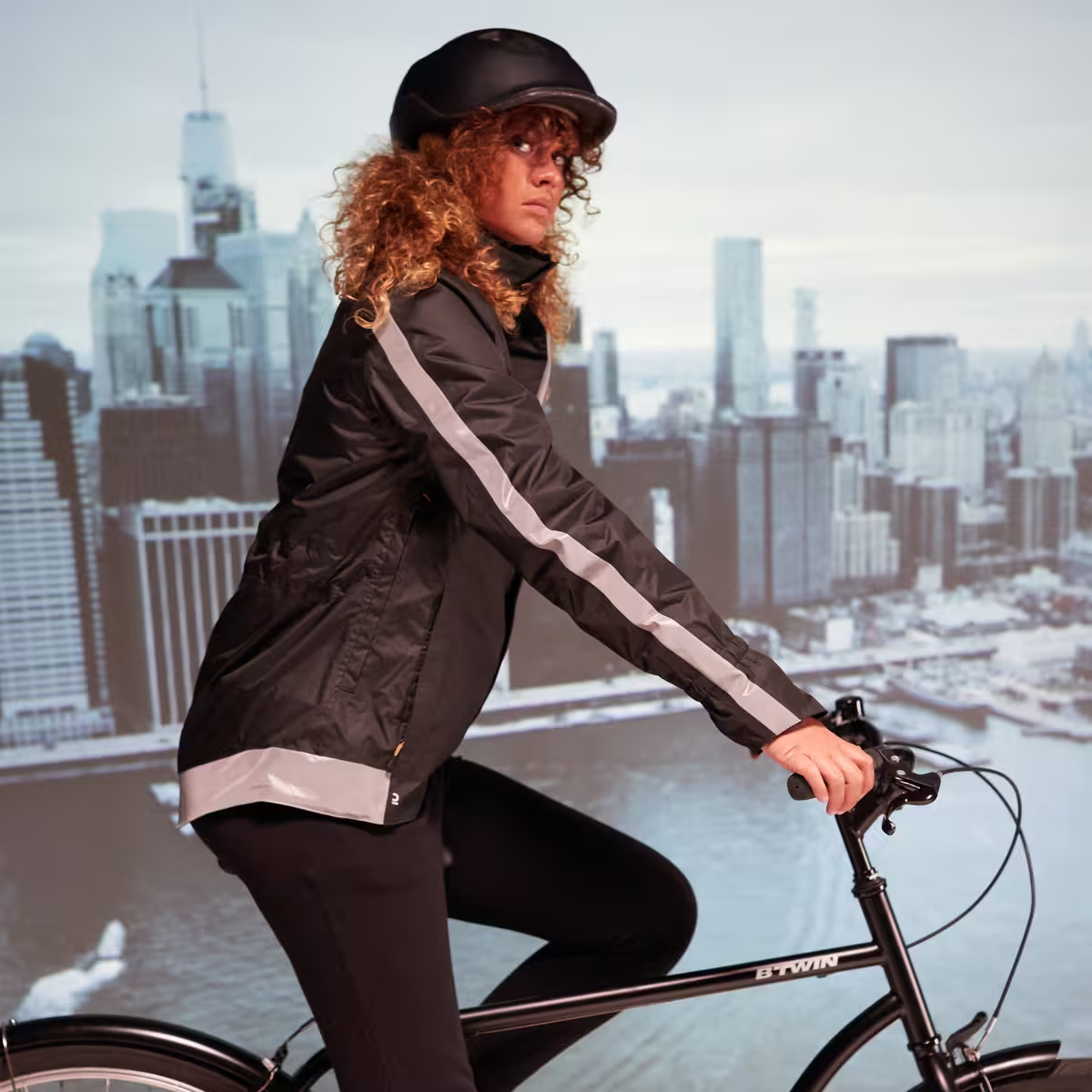
Be seen at night from 50 m away, 360°, thanks to the reflective bands.
-
Adjustable
Adjustable hood, with a drawstring and rip-tab.
-
Warmth
Stay warm thanks to the wadding (filling) designed for above-zero temperatures.
-
Windproof
Keep cycling even in the wind thanks to the coated fabric and hood.
-
Waterproof
Stay dry in the rain for 2 hours with this waterproof jacket & its coated fabric
-
Pockets
Carry your belongings safely in the 3 zip-up pockets.
-
Ventilation
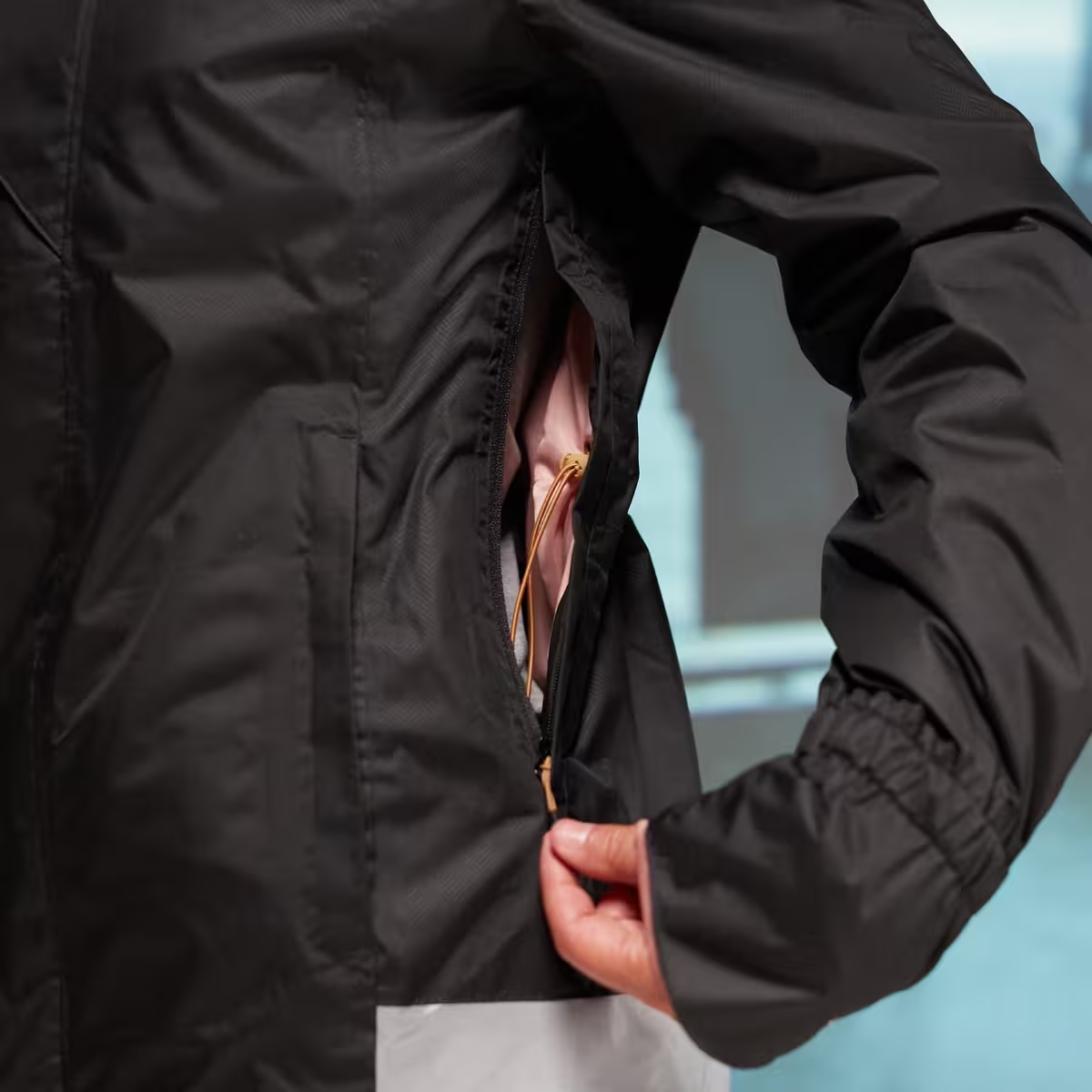
Stay nicely ventilated thanks to the zipped openings under the arms.
Design details
NIGHTTIME VISIBILITY
This PPE-certified cycling jacket comes with reflective strips and a magnetic flap on the front for visibility at night.
The reflective parts have been positioned based on the constraints of cycling (leaning forwards, wearing a backpack, signalling with your arm, etc.) to guarantee 360° visibility at night from up to 50 m away when picked up by car headlights.
CYCLING-SPECIFIC CUT
Its elasticated, fitted shape covers the lower back, arms, neck and wrists while cycling, providing excellent protection.
Ribbed cuffs to stop air getting in.
There are vents under the arms to help air circulate. Equipped with 2 hand pockets and an external chest pocket with a zip fastening for added security.
The hood tucks into the neck and can be worn over your helmet or without your helmet if you're walking
WATERPROOFING
What makes a garment waterproof coating of its fabric. The resistance of a fabric to water pressure is expressed in mm of a water jet (test based on standard ISO 811). The higher the pressure, the more waterproof the fabric. Our fabric has a waterproofing resistance of 2000 mm and can resist the pressure from 2000 mm of water (the equivalent of a rain shower lasting around 2 hours, i.e. 6 to 12 cm of rain in 1 to 2 hours).
COMPONENT BREATHABILITY
Hydrophilic coating (RET = 12): limits condensation inside the garment. To see whether a fabric is breathable, we test its evaporative resistance or RET (based on the ISO 11092 standard). The lower its resistance, the more the fabric lets water vapour produced by the body escape, and the more breathable it is.
For example: RET < 9 = extremely breathable fabric. 9 < RET < 12 = highly breathable fabric. 12 < RET < 20 = breathable fabric. RET > 20 = slightly or not breathable fabric.
Kommentar